
The WELLCORE project - My first ERASMUS+ experience in a training for trainers
Updated: Oct 8

On the 17th of April, I received a seemingly urgent invite for an opening in a training seminar in Germany next month. Along with it came a link to the advert, promoting this training, and another message, telling me that I need to decide quickly. A few days later, I had two tickets to Nuremberg and back, and an adventurous feeling within.
That is basically how I came to know about the WELLCORE project: Strategic Partnership on the topic of WELL-being, mental health, COnnection and REsilience. The project aims to equip youth workers and organizations with the skills and training necessary, to foster mental health and resilience among young people. This year it was held in Nuremberg Germany, in a hotel on the outskirts of the city, surrounded by woods, so we were completely immersed in nature and its tranquillity. Members of the training were going to be groups from four countries: Italy, Spain, Germany and Bulgaria.
To prepare, before leaving for Nuremberg, my group managed to meet. We did so in the office of Impact Drive, and we got to know a little bit about each other in the Bulgarian group. What each of us does for work, what our motivations for joining the training course were. I was the youngest and with the least amount of experience working in the NGO sector, so a part of me felt slightly insecure, but despite that, the overwhelming feelings were certainly curiosity and excitement.
Arrival day was also a time to meet the participants and trainers' team…
Soon, the first day of the training course arrived. The beginning of the day was mostly dedicated to icebreaking activities, an explanation of the goals of the training as well as showing the general structure of the whole program. The structure of the training was shown through the metaphoric image of a tree, with every activity being placed in the tree in regards to the development of the course, symbolizing growth.
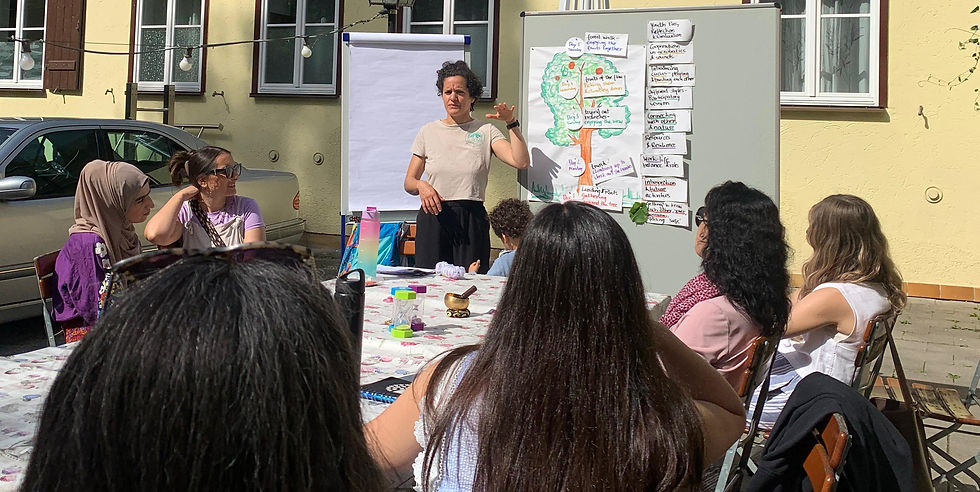
Each day would start off slowly, to prepare our minds for the upcoming activities. This, being the first of five, was an introduction. After quite a few icebreakers, I managed to get a hold of some names as well as get a general idea of the people with whom I'll be spending the next few days. There were some very intriguing people present. Some were university students, others were teachers, youth workers. There were also yoga and circus instructors. A very wide range of professions, all tied closely with young people. One of the first sessions we did, was one with interpreting tarot cards. Led by an Italian facilitator, we each got a card, then a second one and based solely on the symbols that we saw in them, we had to create a collage, using different paper magazines. The atmosphere was creative, buzzing with emotion and connection. The time flew by and when we were done, an hour and a half had melted away. It was then, after a short break, time to discuss our creations in small groups. I found the way we were separated into groups really great as it forced me to communicate with different people constantly, which I don't think I would have done on my own. We shared our interpretations, which really opened each of us up, as the collages greatly mirrored our way of thinking and our wishes in a way. Then it was time for the final part of that session. The facilitator of the activity gathered us together and then she proceeded to explain the symbolic meaning of each tarot card. Following the explanations, we had a group discussion about the use of tarot in our lives as well as how one can use the methodology of interpretation in their work with youngsters.
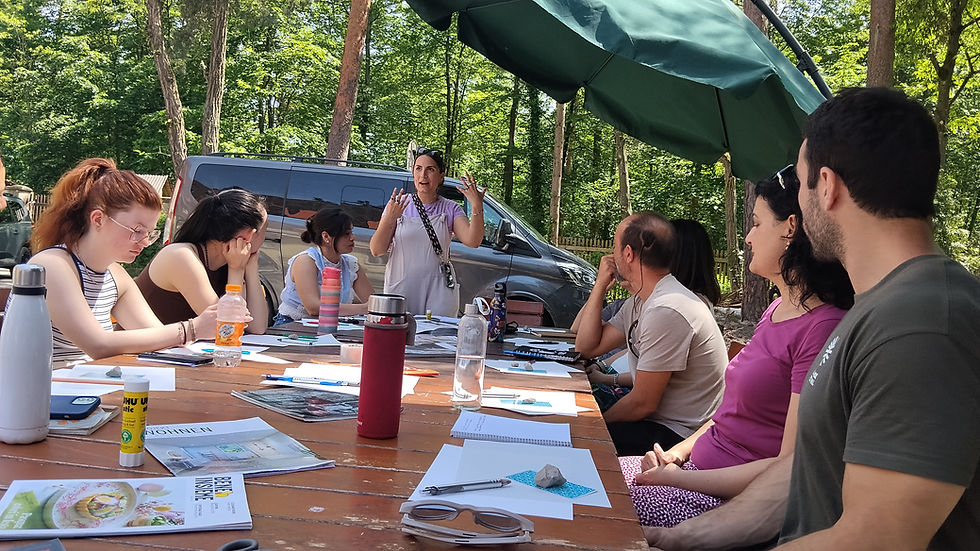
The next session of the day was led by Impact Drive’s very own Theodora. We, the participants, were all divided into groups again, and our task was to play a board game, which focused on different scenarios in the future. Our task as a group was to think of different current events and then imagine how they would unravel fifteen years ahead. We had to recount the scenarios from different perspectives, usually from either a youth worker or a young person, to see how they would be impacted. Some of the scenarios were positive, some negative, mine were mostly the latter, though I was encouraged by my group to be a bit more optimistic. The activity not only made me consider how the choices today would affect people tomorrow, but it also allowed me to express my concerns for the future. The first day ended with some self-reflection work, once again conducted in small groups. I was feeling a little more relaxed in my interactions with the others and confident in my presence in the training. I was also a little puzzled, because I had expected more lectures and a conventional style of learning, as this was my first Erasmus experience. I was definitely not disappointed though, I actually quite enjoyed this type of non-formal education.
Then came the 2nd day....
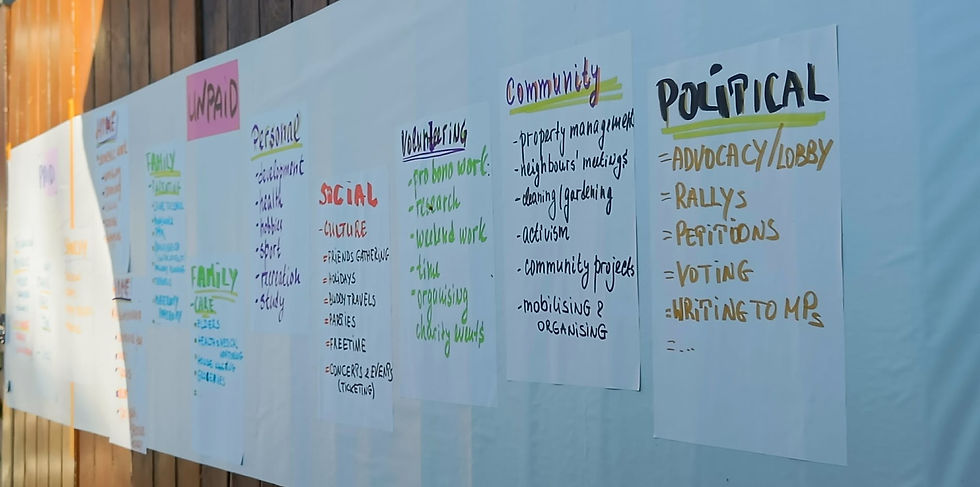
The second day started off with reflexology work. Reflexology, I found, is a type of complementary therapy that involves applying pressure to specific points on the feet, hands, or ears. In our case, we worked with our feet. We were warned to take a shower the previous night, as to not scare off our massage partners, nay, the whole group. Taking that into account, all of us fresh and clean started the day off with a masterclass in foot massages. We paired up and took turners giving and receiving massages. Safe to say the whole group grew a whole lot closer in that hour. After that wonderful, relaxing start, it was time for some self-reflection work. The session was once again led by Theodora, this time focusing on the work-life balance. On a long sheet of paper were marked different activities, each placed into one of two groups: paid and unpaid work/activities.
Each of us, the participants, had to place our name next to each listed activity, and in the end, we had to see how many times our names show up. Then in groups we got to discuss how we balance our work and leisure time, to reflect on the amount of formal and informal labour we did. It was eye-opening, as I, a full-time student, felt as if I did not do a lot of things, yet the activity, and the amount of sticky notes I found with my name written on them, pointed otherwise. I found that quite a few people felt the same way, especially taking into account how many women came forward discussing the amount of unpaid care work they had to do on a daily basis. The experience validated our work and efforts in a way which I hadn't quite experienced before. In fact, I felt quite accomplished afterwards, despite my many worries telling me I'm not doing enough.
After that activity we went deeper into introspection, facilitated by one of my other Bulgarian teammates - Anita. We first used her tailor-made rumination cards, each containing a question inside, which we answered in pairs. Then, we delved into our anxieties, our past, a specific problem and focused on solving that inner issue, through a guided meditative practice.
Later, after a short break, to get ourselves back into the present, we discussed self-sabotage, presented by Theodora. She discussed the roots of self-sabotage, the culturally embedded fear of success. I resonated quite a lot with many of the statements, as they are quite frequently used in my family as well. We also wrote down some of these statements, turning them around, into positive and encouraging ones, letting go of the notion of fear. Our dear facilitator then introduced us to Brene Brown and the power of vulnerability.
After this activity, we ventured outside for the next session, one guided by an Italian facilitator - Sara. We focused on the topic of consent. Pairing up, each of us had to do exercises, which demonstrated the importance of consent. For example, one of them was simply approaching one’s partner from a distance until that partner decides what distance is comfortable and stops them. We reviewed how this experience went for us and we touched upon the topic of social conditioning and the general dismissal of consent, for the sake of pleasing people, e.g. one having to give a hug/kiss to their relatives as a child, even though they don’t want to. It was a very important topic for me as consent is something very valuable and important in any interaction with others.
The last session of the day was created by one of the Spanish facilitators - Ohiane. She had moved us back inside and had organised the room we were in, so that it was comfortable to sit and lay on the floor. We were surrounded with different massage tools, stress relief ones and ones that could be used for yoga. The atmosphere was ambient and calm, with relaxing music playing. We were encouraged to spend the next hour in peace and quiet, doing whatever felt natural and comfortable, whether it was laying down, resting, stretching or exploring the given tools. It was a wonderful moment of tranquillity, which was certainly needed after this eventful day.

We swiftly welcomed the 3rd day...
The third day started off pleasantly with a yoga session outside in the nature, quite challenging for me, because of my debilitating pollen allergies, but nonetheless a great start of the day. Following that, the next session, led by the amazing Spanish facilitator, was one centered round juggling. Yes, we learned, or at least tried to, juggle! We started off with colorful scarves, which we threw around, trying to catch them in time. It was a magical whirlwind of flying colors, accompanied by laughter and quite many failed attempts. When we got used to catching the scarves in the correct order, we leveled up with small balls that were much, much harder to catch. We had to completely clear our minds and focus on the task at hand, which proved to be quite the challenge. We also tried to juggle in pairs, which for me was surprisingly easier than doing it alone.
The next activity was led by our German host - Dina. She, along with some experienced in acrobatic yoga participants demonstrated some activities for trust. Trust falls, counterbalance exercises. After that they explained the three basic roles in acro yoga: base, flyer, spot. The base supports the flyer, who is usually the one climbing the base, doing tricks in the air. The spotter keeps both safe. We were split into groups and we tried some basic poses. I was in the role of flyer and I felt very nervous, but it was an amazing experience. I had never tried this sort of yoga before but it felt very rewarding afterwards. Later, after a break, we ventured out into the surrounding woods for the next session. After a short walk, we were encouraged to focus on different sounds we could hear. Then we had to find a sound to make and keep on making it. We gathered in a circle and proceeded to create a sort of concert, using those different noises we made. After some time, we got back to the hotel and we moved on to our next activity.
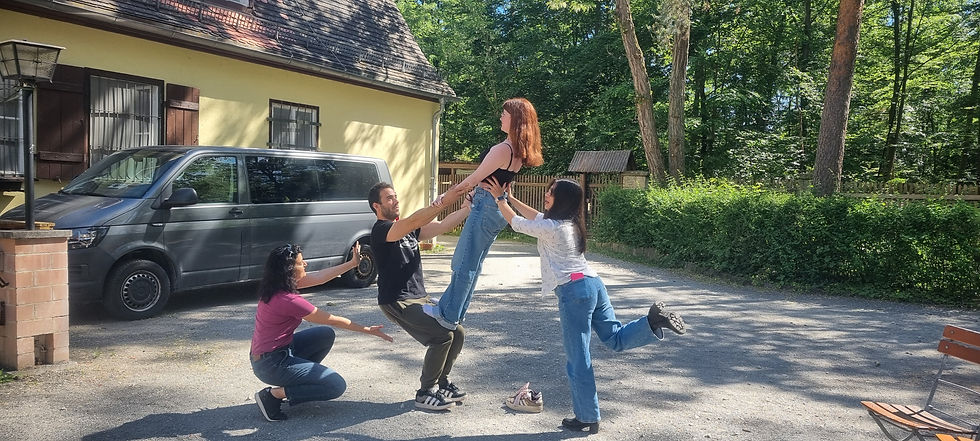
Outside, we continued with more acro yoga. This time we weren't separated into groups and we could partner up with anyone we wanted. I was quite excited, as I realized that I truly enjoyed doing this type of yoga. It involved a lot of trust, strength, coordination between the participants and the end result was beautiful and very impressive. A lot of the poses the facilitators showed us looked almost impossible to me, but I pushed myself out of my comfort zone and tried them. A lot of the poses I tried were with people that I hadn't talked to a lot, but that didn't end up being an issue. It felt like a real bonding moment and I will carry it with me for a long time. I felt so much joy and I felt really proud of myself for trying something new. In a way, I felt it healed something in me. And with that, the day ended, making me wish we had more time.
The 4th day suddenly arrived....
The penultimate day of our experience was planned to be led by us - the participants. Those who wanted to show an activity, could do so in the time-span of twenty minutes each. The day began with a short, yet sweet, Chi Kung session. On a very basic level, Chi Kung is a Chinese wellness practice, which focuses on slow, flowing movement, breathing, meditation, and energy work. We started with some breathing exercises and meditation, to prepare us and then we proceeded with slow movements, to wake up our body and mind for the day ahead. Unfortunately, we didn’t have that much time for a full Chi Kung session, but the time we spent regardless, was amazing.
Later, we sat down for our next session, the topic of which was emotional intelligence in the workplace and assertive communication. It focused on resolving workplace issues through empathy and composure. We first had a brainstorming session on what makes a good manager. We stopped on qualities like confidence, clarity, attentiveness, and honesty. We then had a little roleplay situation, in which two volunteers acted like partners in a project. One has been doing all the work, the other has been slacking off, and they have only one day until their deadline. The objective was for them to resolve this workload imbalance through assertive communication. Of course, the game ended on a sillier note, with one of the volunteers suggesting the other one go to therapy.
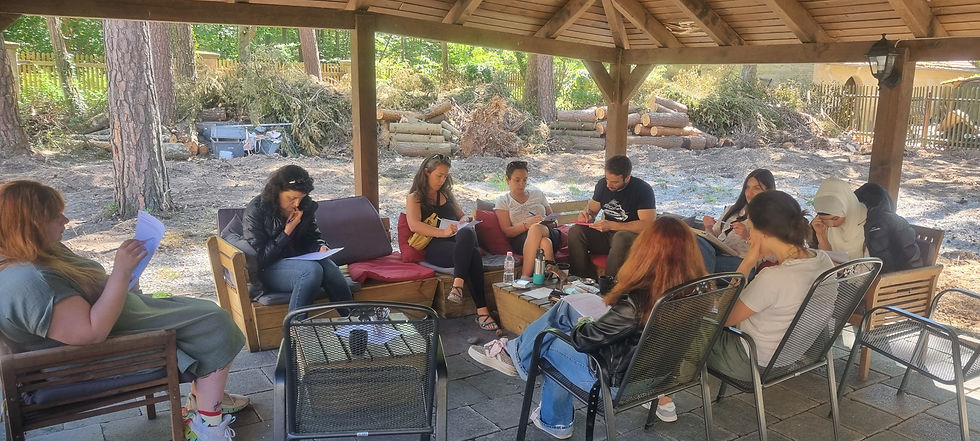
After some laughs, we continued with the next short activity. We sat in a circle, divided into four quadrants. The creator of this activity read a story, which followed the date of two teenagers. Every few sentences, she would stop reading and ask if the characters had agreed to have sex, based on their actions so far (as well as their very important choice of socks). Each quadrant had an assigned yes/no answer, which they had to argue. It was an enlightening activity, because it was interesting to see, culturally, what defined consent. It was also intriguing to notice, that even though the characters had no assigned gender and gender-neutral names, most of the group assumed one was a boy and the other a girl - based on the mannerisms. I found this exercise a great way to introduce the concept of consent to youngsters, as it presents it in an informal way, through story, and one doesn’t need to worry about their opinion being judged, as everyone has to defend an already assigned one.
The next mini-session was a word association one. The facilitator gave us one letter and we had to come up with as many words as we could, starting with it. Then we had to write a story. As a writer, I think that this simple, yet fun, activity is a good way to overcome a bit of writers’ block.
The following activity was an educational one. It taught us about the NLP - Neuro-Linguistic Programming. It's a behavioral model and set of communication techniques, exploring how one’s thoughts, language, and behavioral patterns interact. Its primary goal is to help individuals improve self-awareness and enhance interpersonal communication. There are four types: visuals are people who rely on sight; auditory - people who process the world through sound; kinesthetic: people who process information through physical feelings; auditory digital (Self-Talk): People who rely on internal dialogue, logic, and structured sequences. How we explored this topic and how we found out about ourselves - what type each of us is. We did it by writing a small text, explaining how we arrived to Nuremberg. The details we focused on in the text showed us what category we fell into.
The last activity was a clown workshop, led by a circus instructor. Quite perfect, no? I fail to come up with a way to describe it, except that a new part of me was born. We each crafted our clown identities, and let them be free, introducing them to the world. It was wonderful to be reminded that we are allowed to be goofy and ridiculous from time to time, to let our inner clown out. The sessions were only until early afternoon, as we had the rest of the day free to explore Nuremberg.
The last day was hard....
In a way, because the days that I had were so full of new experiences and challenges and I had also grown quite close to some of the participants, so saying “goodbye” was a bit difficult. But despite that I felt tired and quite happy to be able to go home with all the knowledge and competences, which I had acquired. The day was mostly focused on reflection on the learning adventure that we had. I left that day grateful and hopeful, looking forward to applying the things I've learned, and looking backward to cherish the connections with people, which I've made.
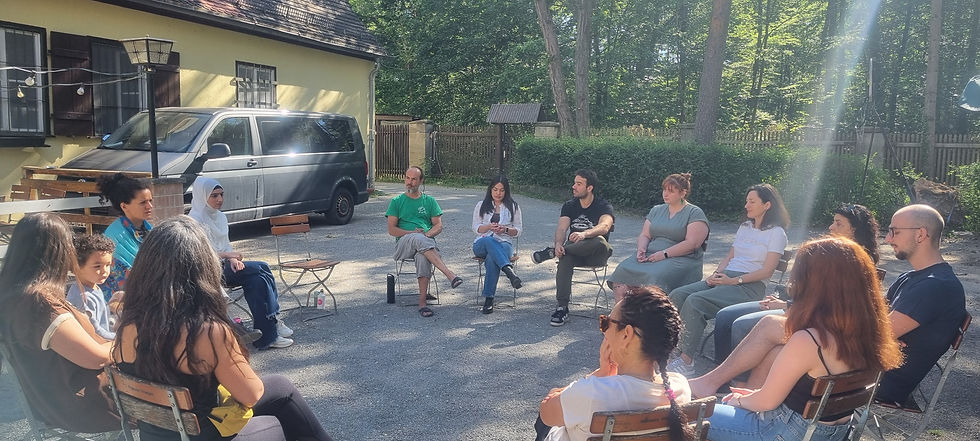
My first ERASMUS+ experience has left a unique impression within me and a desire to join more.
WELLCORE is an Erasmus+ KA220-YOU Cooperation Partnership delivered by four European organisations - Sciara Progetti (Italy, coordinator), DEFOIN (Spain), Highlights e.V. (Germany) and Impact Drive (Bulgaria.WELLCORE develops an innovative training programme for youth workers that combines experiential and participatory methods - movement, theatre, circus arts, acroyoga and group dynamics - to set the foundations for well-being, mental health and resilience in youth work. Alongside this, the project builds a strategy for the youth work ecosystem and creates spaces for dialogue among organisations and stakeholders, culminating in an EU Youth Wellbeing Festival in Italy in 2027.


Comments