
Seeds, Stories and Solidarity: My Four Days at the 4th European Academy on Youth Work

Kranjska Gora, Slovenia · 5–8 May 2026
(Through the youth worker’s eyes and heart of Theodora)
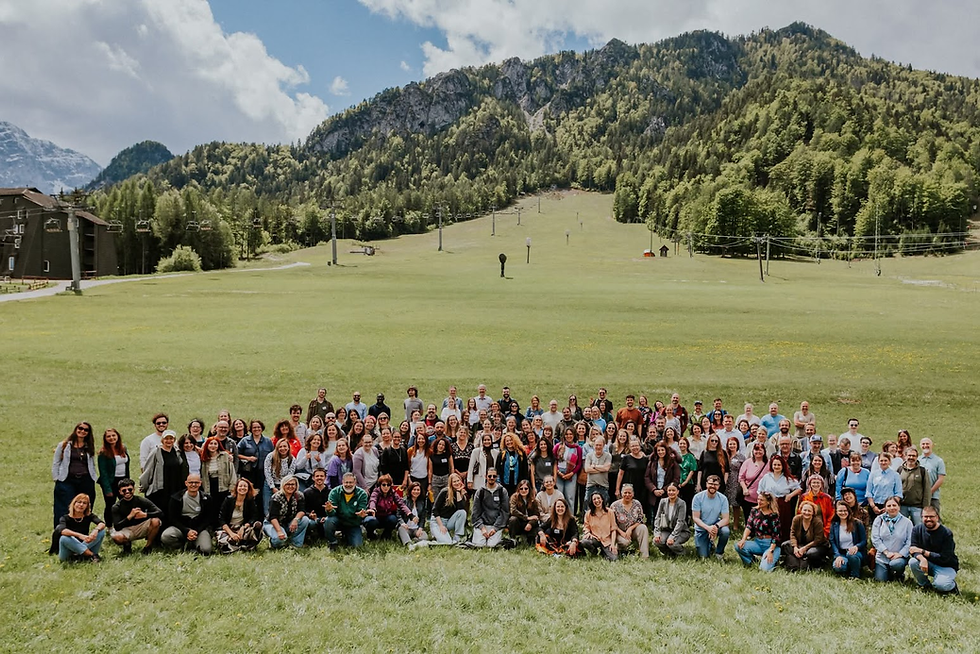
There are events you attend, and there are events you carry home with you. The 4th European Academy on Youth Work (#EAYW) in Kranjska Gora was very much the second kind. Over four intense days, I together with around 200 other youth workers, trainers, researchers, policy makers, National Agency representatives, SALTO Resource Centres and contributors from across Europe (and beyond) gathered in the Slovenian Alps to do something both simple and audacious: think together about the future of youth work.
I came expecting some inspiration. I left with a notebook full of ideas, a phone full of new contacts, and that particular kind of pleasant exhaustion that comes only from genuinely caring about what you do.
Day 1: Arriving, connecting, listening
The first afternoon felt like a reunion among people who had mostly never met. The hotel lobby was a constant traffic of hugs, "it has been ages" greetings and tired-but-happy faces from those of us who had spent the day on planes, buses and trains to get there. There was a small detail that told me immediately this would not be a typical conference: organisers asked us to bring a small "gift" from our country and our practice, something that could tell a story. By the evening, the room had turned into a slow, generous exchange of objects, anecdotes and laughter. A bowl, a sticker, a book, a patch, and then the story behind every small thing opened a door into a project, ideas or someone's daily reality.
The opening set the tone for the whole week. Speakers from MOVIT (the Slovenian National Agency hosting us) and the European Commission's Youth Unit reminded us that youth work has a real place in the next EU Youth Strategy and Erasmus+ framework, and that there is a short, very real window in which our voices on the ground need to be heard in the consultations. There was also a beautiful provocation from Olga Kyriakidou: how often do we leave events like this fired up, only to never return to the materials and outcomes? To help with exactly that, the Academy gave us the Companion, a synthesis of insights from previous editions, designed to keep travelling with us long after we go home. What a present for the professionals.
Knowing that more than 700 people had applied to be in the room made every chair feel like a responsibility, not just a privilege.
Day 2: Hyper-complexity, Deep Dives and the day we did everything
If Day 1 was about arriving, Day 2 was about diving in. Peter Merry's keynote on hyper-complexity put a name on something many of us had been feeling for years: we cannot and need not to "predict and control" our way out of today's challenges. The world moves too fast, systems are too interconnected, and every solution we build carries the seeds of the next set of problems. Our job is not to find a perfect blueprint, but it is to stay adaptive, agile and humble and supportive to those around us. My insight moment: it is ok to Let go of things, because it is the only way the new to come into life.
Then the bubbling group of practitioners split into six parallel Deep Dive groups, each tackling a big theme: change, intergenerational solidarity, resilience and trauma in youth work, polarisation and democracy, and more. I joined the group on Polarisation and Democracy - a topic which, frankly, sits at the centre of every European youth worker's daily reality right now. Choosing one Deep Dive meant accepting the FOMO of missing the other five, so every coffee break turned into a small informal intelligence-gathering operation: "What did you talk about? What did you decide? Tell me everything."
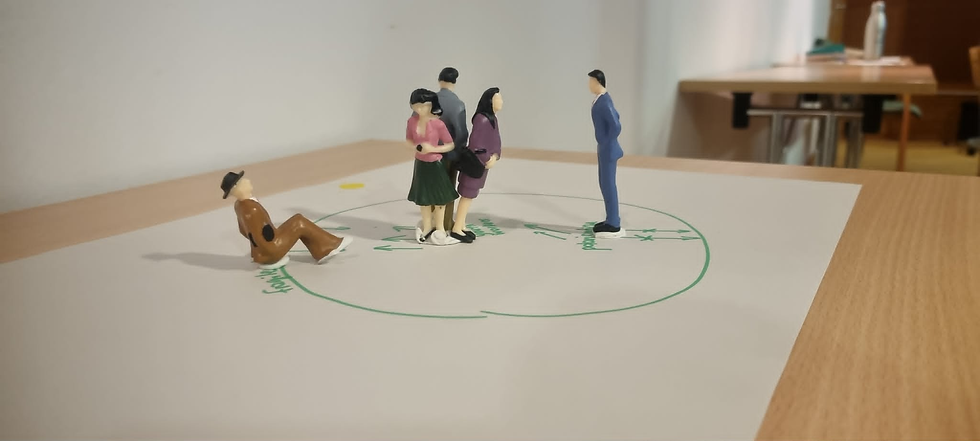

The afternoon keynote by Prof. Dr. Özgehan Şenyuva, "Generations Forward", refused to give us tidy answers. Every question he received was met with two more, exactly the kind of productive confusion the Academy is famous for.
The day spilled into the evening with a marketplace of more than 60 tools and practices, board game testing on the wonderful Ljuba & Drago bus, and a bonfire that turned into one of those conversations you only have far from home, under stars.
Day 3: Resilience, agency and the courage to ask better questions
The third day finally brought sunshine and a clear view of the surrounding peaks. We wrapped up the Deep Dives with conclusions, recommendations and, inevitably, more questions. The panel "Rediscovering Resilience and Agency" with Hranush Shahnazaryan and Dermot O'Brien was, for me, one of the most quietly powerful moments of the week. We talked about trauma-informed practice, about what it means to be the person young people bring their hardest stories to, and about the price we pay as youth workers when we silently become "containers" for everything we hear.
The big takeaway was simple and uncomfortable: resilience is not an individual sport. It is collective care. We are not supposed to save the world alone, and pretending otherwise is part of the problem.
The facilitators from all six Deep Dives then did the heroic work of summarising hours of discussion into clear sparks of insight. A few of those sparks stayed with me: that we sometimes need connections more than answers; that it might be time for youth work to become political again; and that hope and hopelessness can live in us at the same time without cancelling each other out and above all - the youngster, not necessarily worry about the AI. We finished the day with parallel Tools Labs. I was with the wonderful Anita Silva, experiencing the tools for hopeful future thinking and conversation starters around the common future.
Day 4: Seeds of action
The closing day felt different. The fog of Day 1 had become clarity. Mireille van Bremen translated everything we had said, drawn and argued about into a single vision board — challenging, unpredictable, and full of potential. Darko then offered the metaphor that will probably stay with me longest: at the Academy we do not sell fruit, we collect seeds. The real work is planting those seeds back home, in our own communities and our own contexts.

Sonja Mitter Škulj's closing speech reminded us that whatever happens with the Academy as a format we must keep creating spaces to think together about the future, and we must take seriously the question of impact: how have we, and our communities, actually changed because of this work?
So yes, the residential part of #EAYW is now behind us, but I am quite sure the real work has only started. Lots of new connections, plenty of "let's do this together" promises, and a head full of seeds waiting for the right soil.
To everyone who shared these four days - thank you. See you on the bridge.


Comments